
Known Machines for the TLC Process
The development of a specialized heat engine for the TLC process was preceded by extensive studies. Various research and development efforts regarding suitable heat engines for the TLC process are listed in patents and scientific literature.
This includes known machines from compressed air and vacuum technology that are operated in reverse, as well as turbine developments.
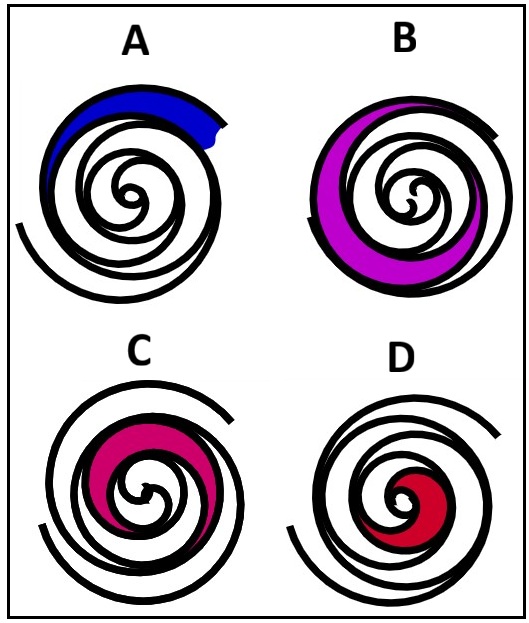
E.g. Scroll expander (Wikipedia)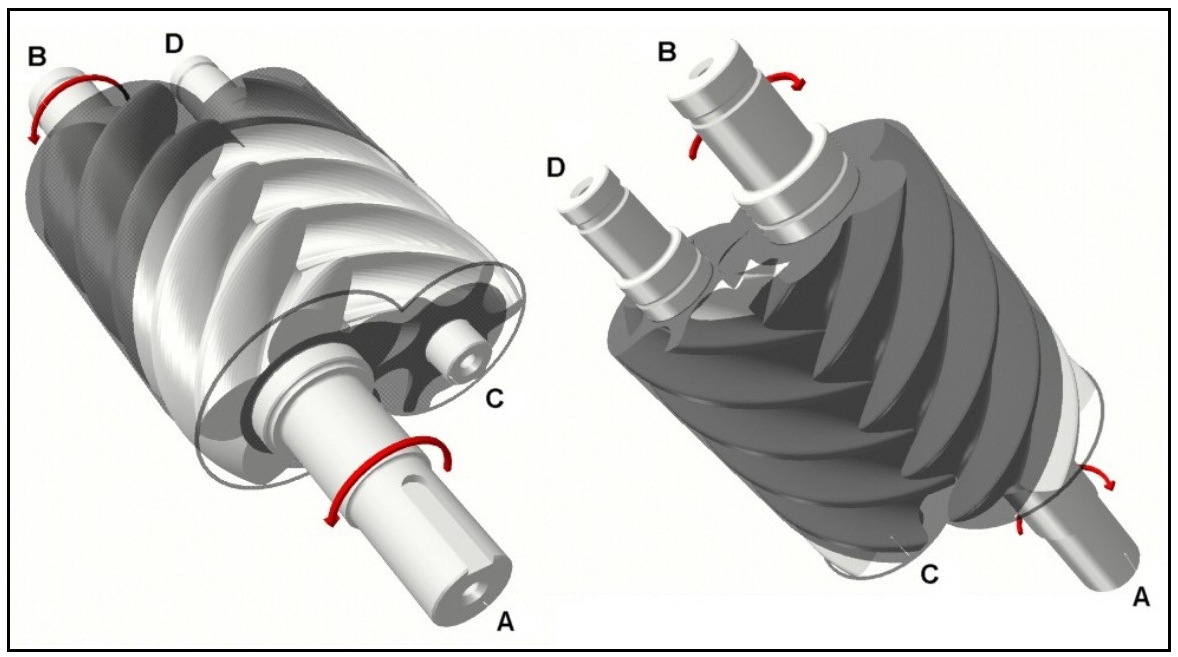
E.g. Screw expander (Wikipedia)
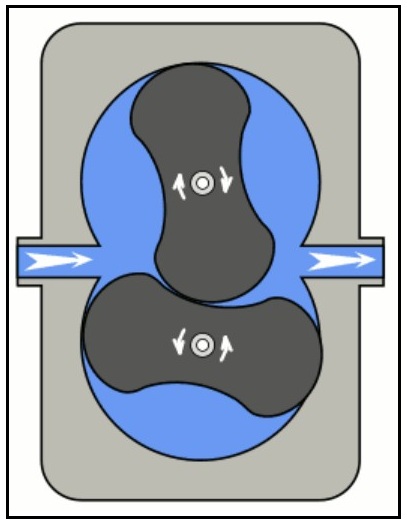
E.g. Roots blower (Wikipedia)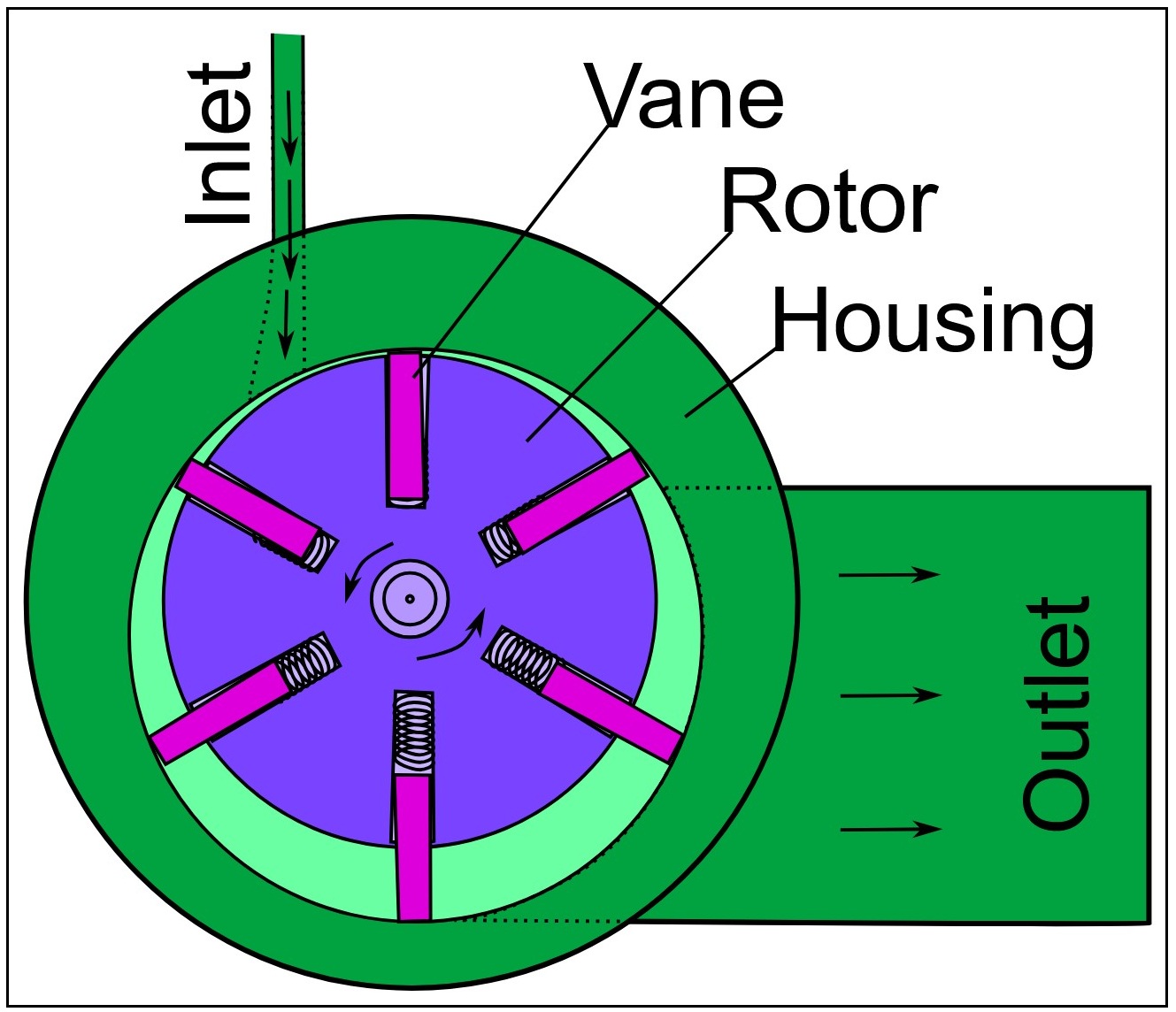
E.g. Vane motor (Wikipedia)
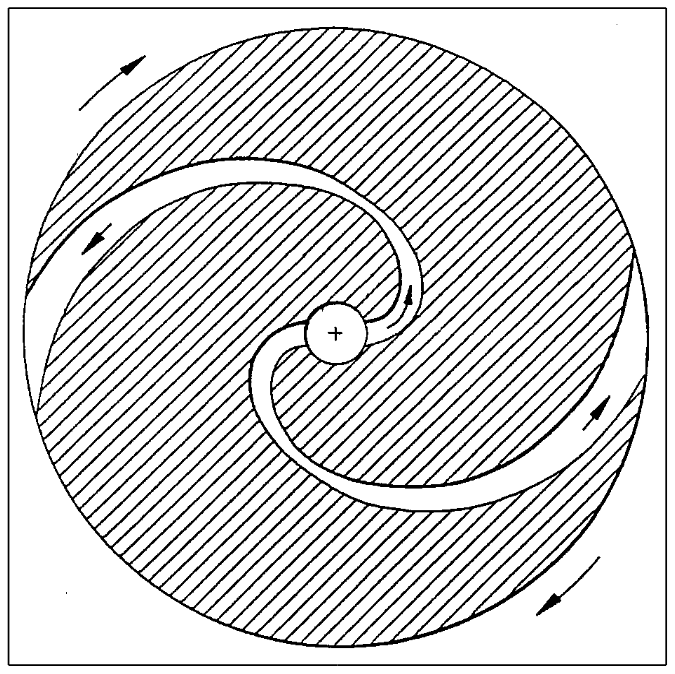
Turbine 1 (US5236349A)
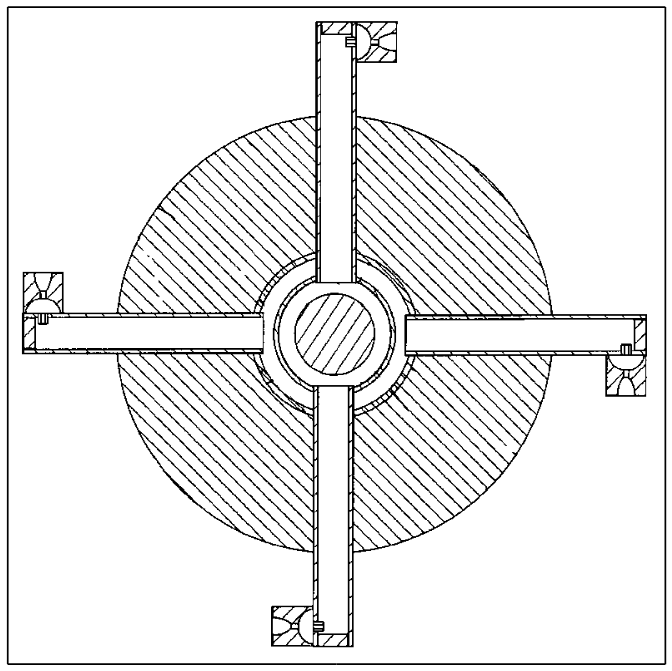
Turbine 2 (US2006034677A1)
These machines usually have only a single revolution for the conversion of thermal into mechanical energy, which occurs within only a few milliseconds (for comparison: 3000 rpm = 20ms/rev), leading to losses:
– unused thermal energy due to incomplete flash evaporation within the machine
– conversion losses because:
* the p-V curve of the machine does not match the p-V evaporation curve of the working fluid
* incomplete evaporation of the working fluid
* there is no p-V curve, only a single operating point
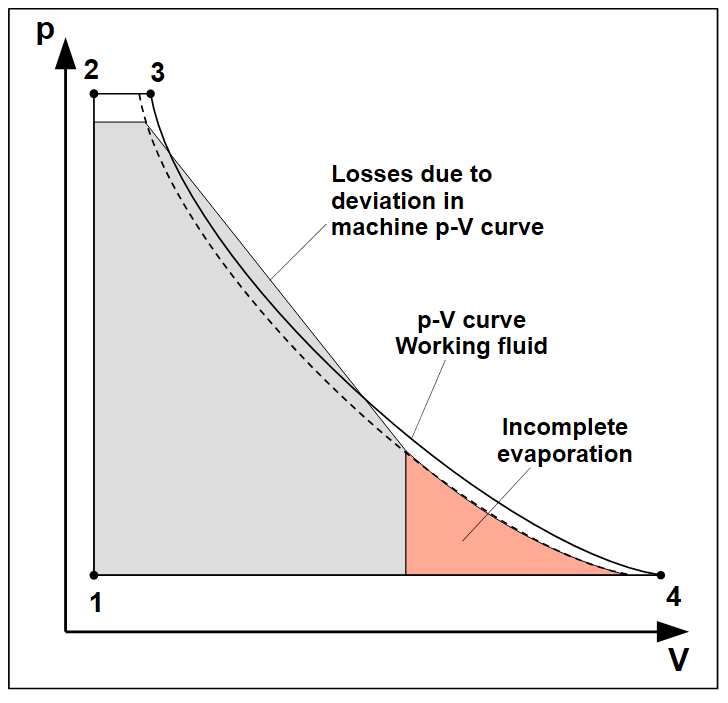
Unsuitable p-V curve
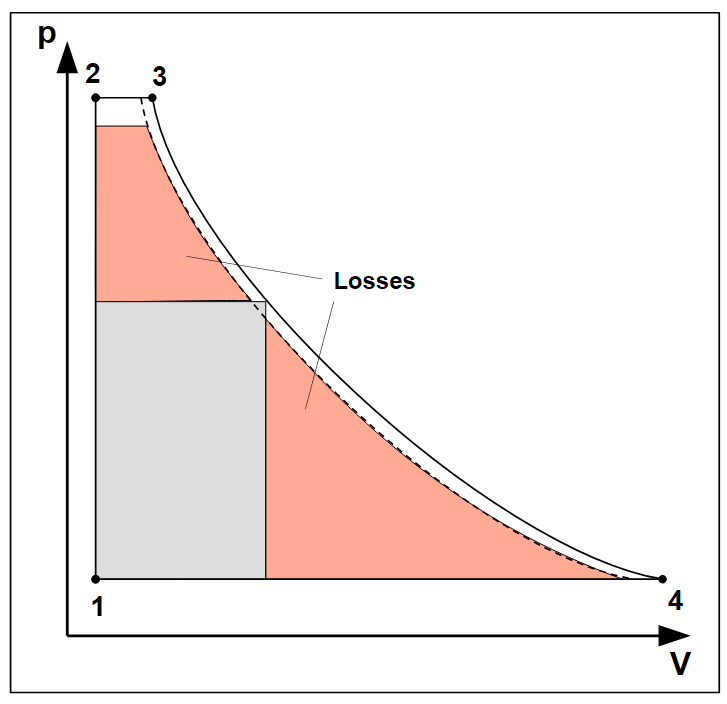
No p-V curve
In addition, there are technical problems such as:
– sealing losses
– damage to machine elements due to droplet erosion/cavitation, triggered by rapid flash evaporation
– limited application areas due to fixed operating points based on mechanical design
– complex-to-manufacture components such as expander screws or turbines