
TLC Power Plant
The design of a TLC power plant (TLC-PP) does not fundamentally differ from other known thermal power plants. The working fluid is drawn from a reservoir, pressurized by a pump, heated, and supplied to the TLC heat engine, where energy conversion takes place.
The partially vaporized working fluid is then collected, the vapor is condensed, and the liquid working fluid is returned to the reservoir.
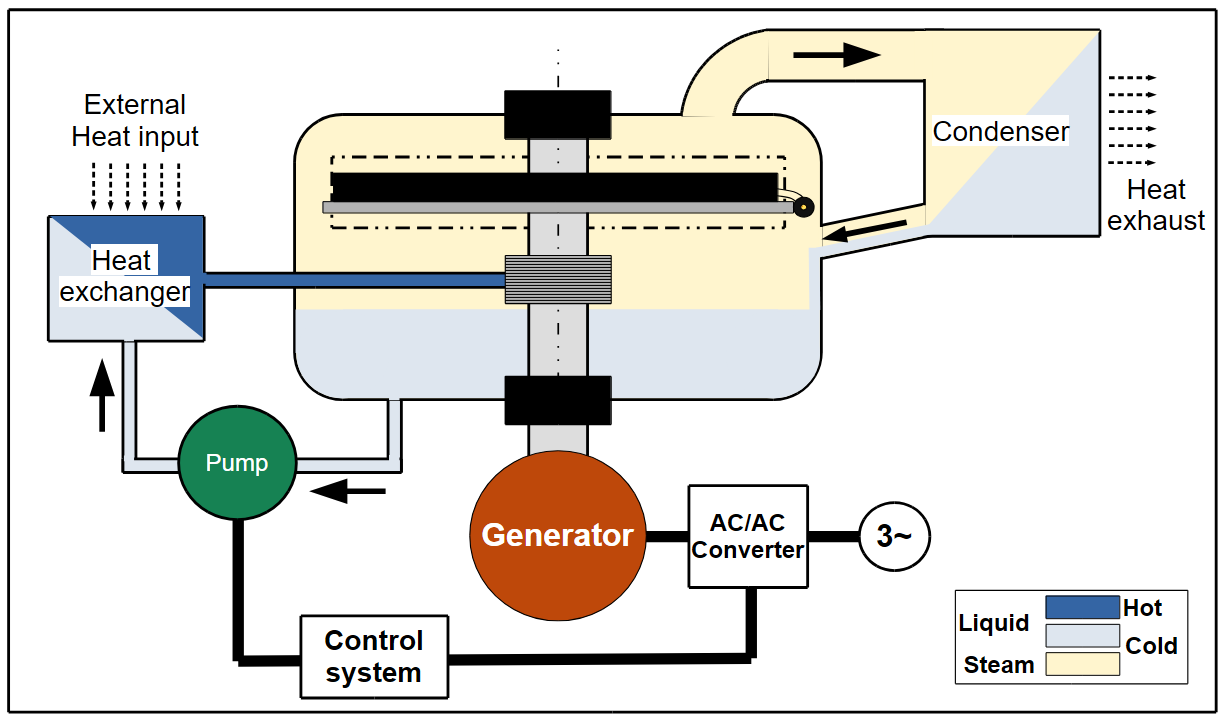
Design of a TLC Power Plant
Differences can be found in the heating process, where a heater is used instead of an evaporator, and the heated working fluid is supplied to the TLC rotor via a rotary union and hollow shaft, unlike in turbines or engines.
By using a variable-speed generator and an AC/DC/AC converter, as known from wind turbines, the generated energy is made grid-compliant.
A control system regulates and optimizes the pump output for maximum energy yield.
Variable Operating Range
As already explained in the description of the TLC rotor, a TLC power plant has a variable operating range. This operating range is determined by the maximum temperature of the working fluid at entry into the TLC rotor and the condensation temperature.
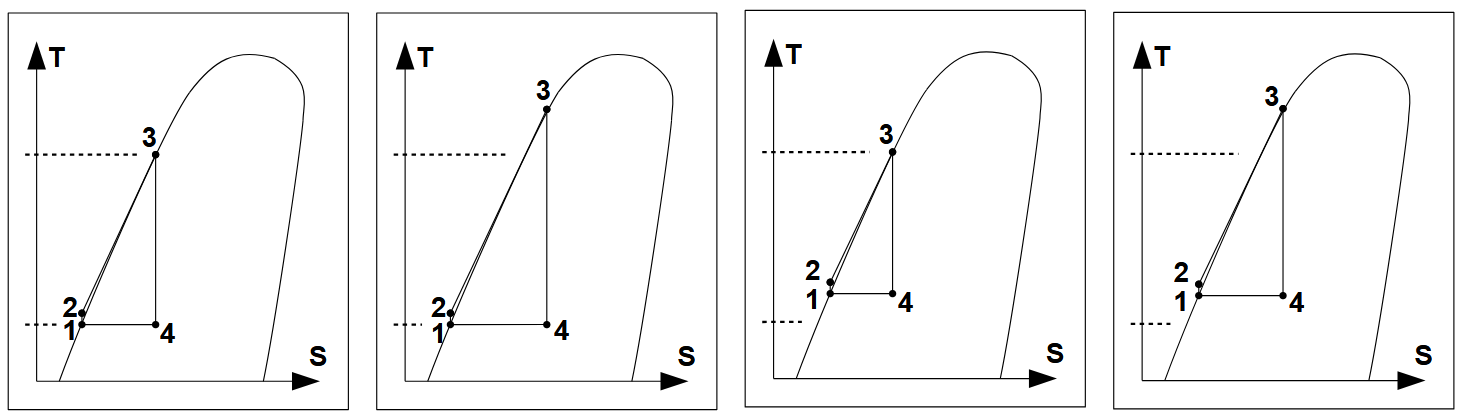
Variation of the Operating Range
Starting from base temperatures (diagram on the left, dashed lines), the temperatures can vary arbitrarily.
The second diagram from the left shows an increase in inlet temperature, as can occur during the day when using solar thermal heat, for example.
The higher inlet temperature results in a greater pressure differential between inlet pressure and condensation pressure, leading to an increase in the rotational speed of the TLC rotor and thus higher output.
The third diagram shows an increase in condensation temperature, as can occur during the day with condensation cooling by ambient air. This reduces the pressure differential, the rotational speed of the TLC rotor decreases, and the output decreases.
The diagram on the right shows an increase in both inlet and condensation temperatures.
This can occur during the day when using solar thermal heat and cooling by ambient air. The output can be lower, but also higher.
By means of the variable-speed generator and the AC/DC/AC converter, variations in inlet and condensation temperatures can thus be flexibly utilized over a wide range.