
The TLC Process in the T-S Diagram
The representation of the TLC process in the T-S diagram, the standard representation of heat engine cycles in thermodynamics, shows the eponymous triangle (Tri-Lateral). Alongside is the corresponding p-V diagram.
In the TLC process, the working fluid undergoes the following steps:
– Isochoric pressure increase
– Isobaric heating
– Isentropic expansion evaporation
– Isobaric condensation
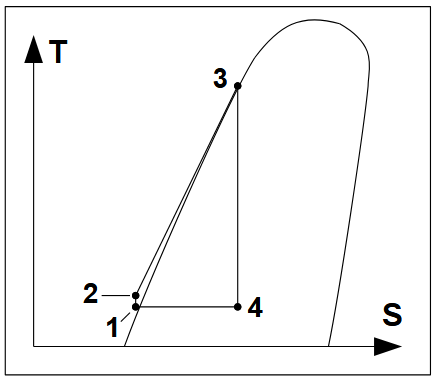
T-S Diagram of the TLC Process
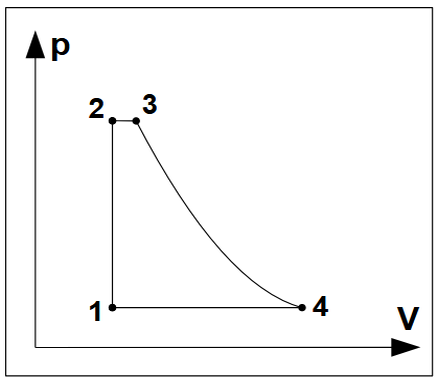
p-V Diagram of the TLC Process
Representation as a Technical Process
The technical interpretation of a T-S diagram is typically familiar only to specialists.
Therefore, a simplified representation of the TLC process as a technical process is provided below.
The numbering refers to the thermodynamic representation in the T-S diagram.
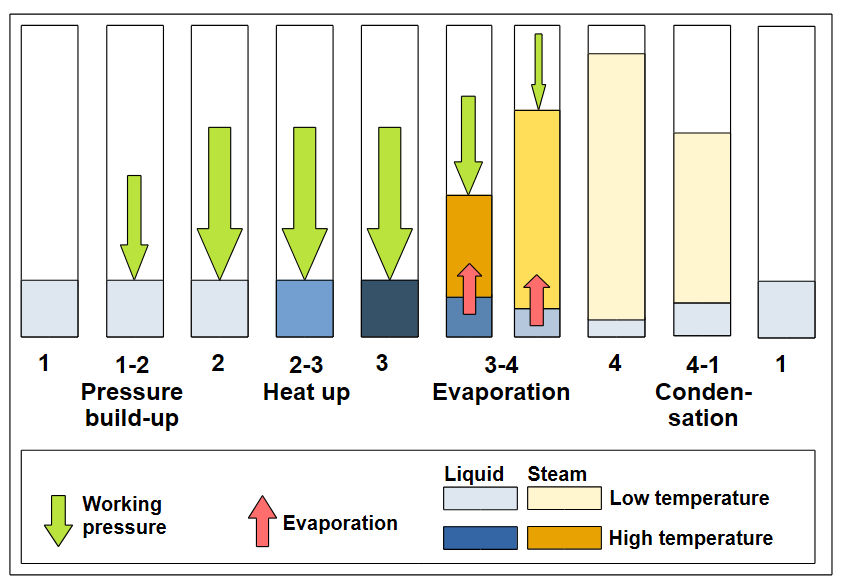
The TLC Process as a Technical Process
Point 1: Initial state, the working fluid is cold, liquid and unpressurized
Point 1-2: the working fluid is pressurized
Point 2: the working fluid is under pressure
Point 2-3: the pressurized working fluid is heated up without evaporating
Point 3: the pressurized working fluid is hot
Point 3-4: the pressure is reduced, resulting in an expansion evaporation of the liquid working fluid with simultaneous volume increase and decreasing temperature of both liquid working fluid and vapor
Point 4: the working fluid has been partially evaporated by the absorbed thermal energy, is cooled and unpressurized
Point 4-1: the generated working fluid vapor is condensed and the initial state 1 is restored
The Challenge of the TLC Process
The technical challenge of the TLC process is realising the expansion evaporation between points 3 and 4.
The requirements of the TLC process for a heat engine are explained in more detail under Requirements for a TLC Heat Engine.
Further Development of the TLC Process
Intensive engagement with the scientific findings on the TLC process as well as work on specialized heat engines for the TLC process led to a further development of the TLC process, the Extended-TLC Process (E-TLC Process).